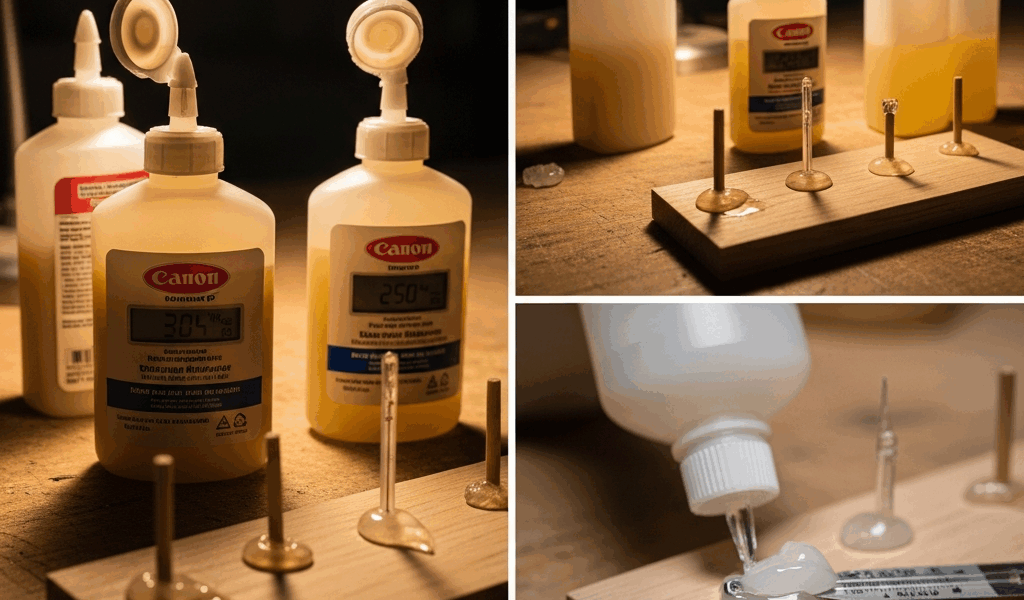
Why Wood Glue Turns White or Cloudy
Wood glue has changed quite a bit thanks to the conflicting advice flying around. Temperature, glue brands, clamping pressure, open time — everyone’s got a theory. But after chasing milky glue lines across more projects than I’d like to admit, I’ve learned what actually matters. Today, I’ll share it all with you.
The joint feels solid. Clamps came off on schedule. And yet there it is — a white, milky, or translucent streak right where you wanted clean, invisible strength. Most woodworkers immediately blame the glue itself. Bad batch, wrong type, expired bottle. In my experience, that’s almost never it.
But what is actually happening inside that glue line? In essence, it’s a water-evaporation problem. But it’s much more than that. PVA-based glues — polyvinyl acetate, the stuff in those standard yellow and white bottles — cure by shedding water. When conditions aren’t right, the water doesn’t leave cleanly. It leaves stress patterns, air pockets, or incomplete polymerization behind. Those imperfections catch light and look white. The joint might hold fine. It just looks terrible.
Three things cause this almost every time: temperature too low during cure, glue applied too thick, and moisture trapped in the joint. Temperature is the biggest offender by a wide margin. Quick note before the rest of this.
Check Your Shop Temperature First
Most PVA wood glues need somewhere between 50 and 65 degrees Fahrenheit minimum to cure properly. Drop below that and everything slows down — the water in the glue stops evaporating efficiently, and you end up with that cloudy, almost frosted look in the glue line.
I learned this in November gluing up a walnut panel in my unheated garage. It was sitting around 44 degrees that morning. The joint looked fine right after clamping. Next morning — dull white line, wall to wall across a piece I’d built specifically to show off the grain. The bond was structurally sound. I tested it. But cosmetically, it was done.
Side-step the error I made. Move the workpiece somewhere heated before the glue even goes on. A basement, a spare bedroom, a heated shop — anywhere that holds 65 to 70 degrees consistently works. PVA needs roughly 18 to 24 hours at that temperature for a full cure. Every 10 degrees below that doubles your cure time, roughly speaking.
If moving the project isn’t realistic, you’ve got two other paths. First, you should warm the joint directly using a heat gun on low — at least if you keep it moving constantly and stay at least 12 inches back. You’re not trying to scorch anything. You’re just nudging the surface temperature above 65 so evaporation can happen. Works better than it sounds.
Your other option is switching to a cold-weather glue. Titebond III might be the best option here, as cold-condition gluing requires consistent adhesion below 50 degrees. That’s because it cures clearly starting around 45 degrees. Some polyurethane options work down to 35. Buy a small bottle — the 8-ounce runs about $8 to $10 — and test it on scrap before committing.
Too Much Glue in the Joint
Over-applying glue is the second culprit, and it happens more often than anyone likes to say out loud.
Thick beads mean uneven curing. The excess traps moisture inside the glue film. That moisture has to migrate out before the glue can polymerize cleanly — and when there’s too much of it, it doesn’t always make it. You end up with milky spots, often concentrated right where squeeze-out was heaviest under the clamps.
The right amount is a thin, even coat. Tacky and wet-looking after spreading. Not rivers, not puddles — just coverage. It’s less glue than your gut tells you to use. I’m apparently someone who over-applies by instinct, and a glue roller — the small 3-inch foam kind — works for me while a brush never really did. The roller forces a consistent, thin spread every time.
That’s what makes squeeze-out a misleading signal for us woodworkers. For years I assumed thick squeeze-out meant great coverage. It doesn’t. A starved joint is weak, yes. But an over-glued joint is also weak, just differently — and it looks bad on top of everything else.
Wood species complicates this too. Dense or oily woods — teak, rosewood, even some walnut — absorb glue slowly. The glue sits on the surface longer before pulling into the wood. Heavy applications on these species means extended surface time, which means more moisture sitting in the glue line instead of evaporating out. Use a little less on these, and clamp immediately after assembly. Don’t leave it sitting assembled and unclamped for five minutes while you look for another clamp.
The Joint Moved Before the Glue Set
Early clamp removal — or even tiny shifts during cure — creates what’s sometimes called stress-white. Frosted, crystallized-looking patches in specific areas of the glue line. That’s not a coincidence.
PVA hasn’t fully polymerized while it’s still wet. Move the joint before initial set and you stress the partially cured polymer. Those stress points show up white once everything hardens. Sometimes it’s a faint haze. Sometimes it’s unmistakable.
Standard open time on most PVA glues runs 5 to 10 minutes — that’s your window to position and clamp before the glue starts resisting. Initial set takes 30 to 60 minutes depending on temperature and brand. But initial set isn’t done. Leave clamps on a minimum of 2 hours. Overnight is better, especially if the joint’s sitting in warm air or direct light.
Hide glue and polyurethane glues behave differently here. Hide glue sets faster but stays reversible longer — wider repositioning window than PVA. Polyurethane glues generate heat during cure and need less clamp time overall, but over-apply them and you get foam expansion, which is a whole separate headache.
How to Fix Cloudy Glue Lines That Already Dried
So, without further ado, let’s get into what you can actually do once the damage is done. Three realistic options, depending on where the joint sits and how visible it is in the finished piece.
Light heat sometimes re-clarifies a cloudy PVA line. Aim a heat gun at the cloudy section for 30 to 60 seconds from about 10 inches out. You’re not trying to liquefy the glue — just warm it enough to drive out any residual moisture. Honestly, this works maybe 40 percent of the time. The other 60 percent, the line stays white regardless.
Sanding through the glue line is the real answer for anything visible in the finished piece. Tabletop, drawer front, picture frame — if people will see it, sand it out. Start at 80-grit, work down through 120, finish at 150 or 180. That removes the cloudy layer entirely and gives you a clean surface to finish from.
For structural joints that won’t show — inside a cabinet, underside of a table, interior framing — leave it alone. That’s what I do. The white line is purely cosmetic. The bond is there.
Next time: temperature first, less glue, patience with the clamps. That combination solves this problem 90 percent of the time before it starts.


Stay in the loop
Get the latest the workshop journal updates delivered to your inbox.