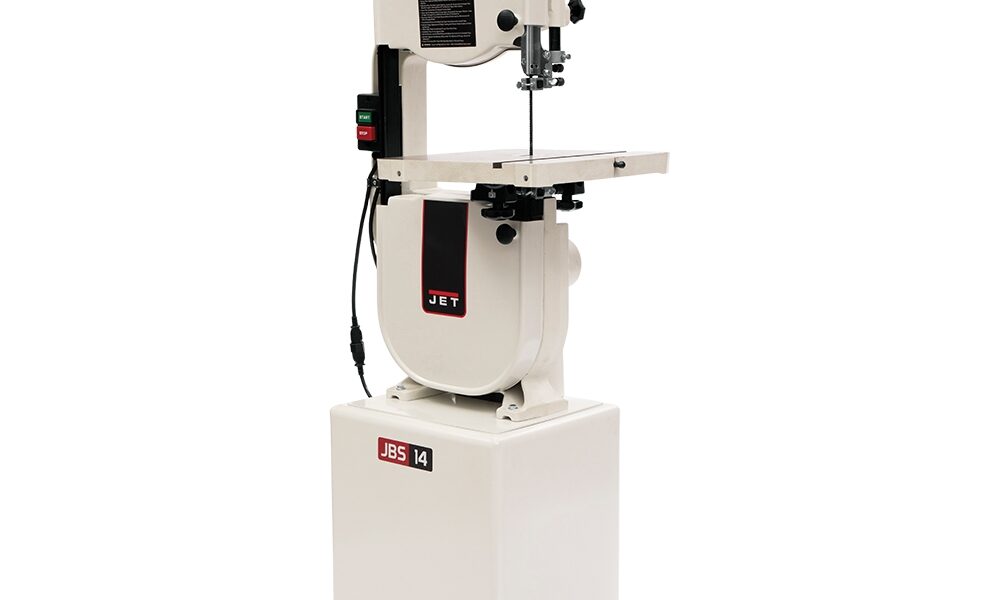
As someone who started with a 14-inch saw, added a 17-inch saw when the work demanded it, and has run both in the same shop for years, I learned everything there is to know about what actually separates these two sizes in real use. Today, I will share it all with you.
Understanding Bandsaw Sizing
Bandsaw size refers to the wheel diameter, which determines throat capacity — how wide a piece you can cut measured from the blade to the column. A 14-inch bandsaw cuts material up to roughly 13-1/2 inches wide. A 17-inch saw gets you to about 16-1/2 inches wide. That extra 3 inches matters more than you might think, particularly for resawing and for curved work on wider stock.
Resaw capacity is the second critical measurement — how tall a piece you can stand on edge and slice into thinner boards. Entry-level 14-inch saws often limit you to 6 inches, which is fine for smaller stock but frustrating when you want to resaw wider boards. Quality 14-inch saws with riser blocks installed can reach 12 inches. Most 17-inch saws start at 12 inches and extend further with riser blocks. If resawing wider material is part of your regular work, this number is the one that drives the decision.
Resawing Reality Check
Resawing demands power, blade tension, and stability that a lighter machine simply can’t deliver consistently. A 1-HP motor on a 14-inch saw will struggle through 8-inch wide hardwood — the blade wanders, the motor heats up, and you’re left with wavy cuts that require excessive jointing cleanup.
Move to a quality 17-inch saw with 2+ HP and a proper resaw blade — 1/2-inch minimum, 3/4-inch preferred — and the same cut becomes controlled and predictable. The larger wheels reduce blade fatigue and allow proper tensioning of wide blades.
If resawing is occasional and limited to boards under 6 inches, a quality 14-inch saw handles it adequately. If you’re producing your own veneer, slicing thick slabs, or regularly processing 10-inch-plus material, the 17-inch saw is the right choice and the 14-inch will frustrate you repeatedly.
Curved Cutting Considerations
For curved cuts, both sizes accept blades down to 1/8-inch wide for intricate scroll work. The difference is in coasting distance and blade tracking on longer unsupported runs. Larger wheels create longer unsupported blade spans, which can cause vibration with narrow blades. Quality 17-inch saws include blade guides positioned close to the work to minimize this, but it’s worth noting. Most general curve cutting uses 1/4-inch or 3/8-inch blades where both saw sizes perform equally well.
Setup Requirements
A 14-inch bandsaw weighs 200-300 pounds and fits through standard doorways without disassembly. A 17-inch saw weighs 350-500 pounds and may require taking it apart to get it into the shop. I’m apparently someone who didn’t think carefully enough about this before ordering a 17-inch saw, and the doorway-width problem works itself out if you plan for it while finding out the hard way never feels good. Plan your shop layout before the saw arrives, not after.
Mobile bases work well for 14-inch saws. For 17-inch saws, use heavy-duty bases rated for the load, and consider bolting to the floor for maximum stability during resawing operations. Both sizes connect to 4-inch dust collection ports. The 17-inch saw produces substantially more chips during heavy resawing and benefits from a more capable dust collection system.
Blade Selection and Cost
Blades for 14-inch saws run $15-35 each. Blades for 17-inch saws cost $25-50 each. The length difference adds up over time, especially if you’re running quality blades and replacing them at appropriate intervals rather than running them until they break. Keep three blades on hand for each saw: a narrow blade in 1/8-inch or 3/16-inch for tight curves, a general-purpose 3/8-inch or 1/2-inch blade for most work, and a dedicated resaw blade in 1/2-inch or 3/4-inch for slicing thick stock. Having the right blade installed means not switching mid-project.
The Fence Question
Factory fences on most bandsaws — regardless of size — are inadequate for precise resawing. Budget for an aftermarket fence before you expect the machine to do accurate work. Kreg, Laguna, and Carter all make quality bolt-on fences that transform resawing accuracy. A proper fence includes micro-adjustment, positive locking, and the ability to account for blade drift. This is not optional equipment for serious resawing work.
My Recommendation
For general woodworking, furniture making, and occasional resawing of material under 8 inches: a quality 14-inch bandsaw with at least 1 HP delivers excellent value and handles the full range of general shop tasks without compromise. For serious resawing, processing thick slabs, cutting large curved components, or any production work: invest in a 17-inch saw with 2+ HP. The capability difference is substantial once you’re working near the limits, and you won’t outgrow it.
Whatever you choose, spend more on the saw itself and less on accessories initially. A quality base machine with a good fence and proper blades outperforms a lesser saw buried in add-ons every time.



Stay in the loop
Get the latest the workshop journal updates delivered to your inbox.