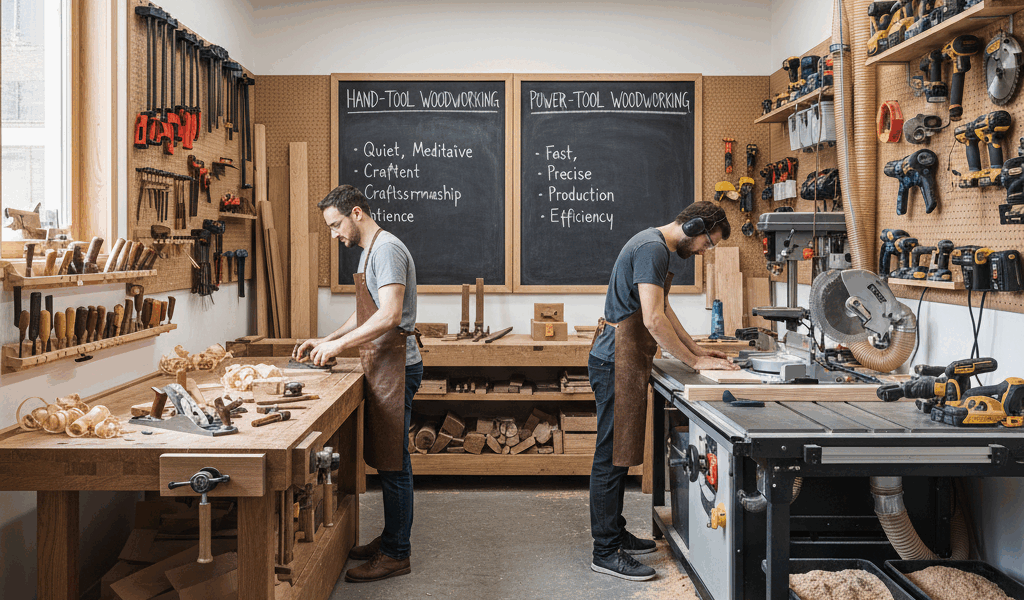
Someone asked me at a craft fair what kind of woodworker I was. I stumbled through an answer about furniture and cabinets, but the question stuck with me. There really are two distinct approaches to working wood, and most of us lean heavily toward one or the other.
Carpentry vs. Fine Woodworking
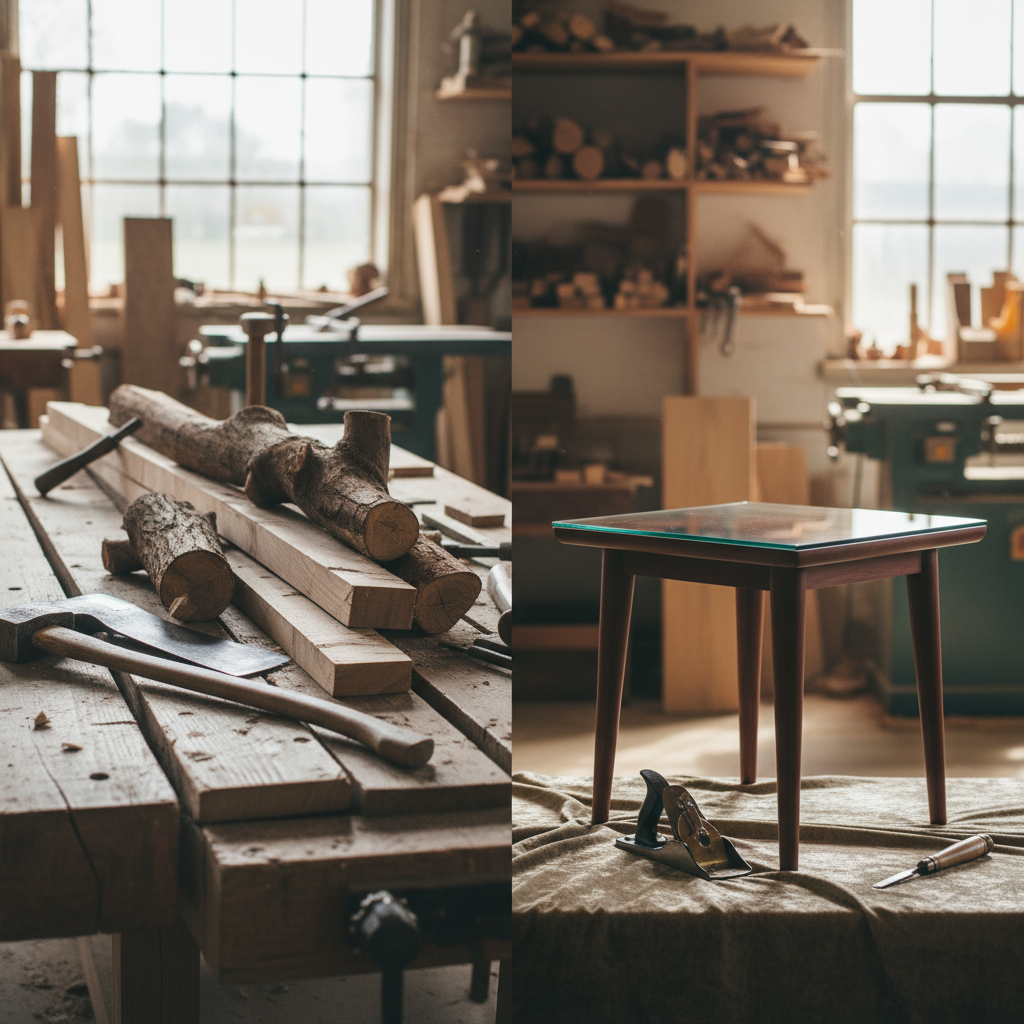
The basic split comes down to construction versus craft. Carpentry builds structures—houses, decks, framing, rough-in work. Fine woodworking makes objects—furniture, cabinets, instruments, decorative pieces.
My grandfather was a carpenter. He framed houses, hung doors, built decks. His tolerances were measured in fractions of inches, and an eighth-inch gap was perfectly acceptable. Speed mattered because time was money on a job site.
I’m a furniture maker. My tolerances are measured in thousandths. A visible gap means I messed up. Speed matters less than precision because clients pay for quality, not efficiency.
Same material, same basic tools, completely different mindsets.
The Carpenter’s World
Carpentry is construction-scale woodworking. The lumber is bigger—2x4s, 2x10s, sheets of plywood. The joints are simpler—nails, screws, construction adhesive. The goal is structural integrity and reasonable appearance, not perfection.
A good carpenter can frame a wall in the time it takes me to flatten one board. They work fast because that’s the job. They work accurately enough because the drywall will cover minor imperfections.
I tried carpentry one summer, helping a friend with a deck project. Different rhythm entirely. We moved through material that would take me weeks in a single day. The satisfaction came from visible progress—from nothing to something in hours.
But the joinery was crude by my standards. Joist hangers instead of mortise and tenon. Lag screws instead of drawbored pegs. Effective, sure, but not beautiful. That’s not a criticism—it’s the nature of the work.
The Fine Woodworker’s World
Fine woodworking slows everything down. The lumber is smaller, often hand-selected for grain and figure. The joints are complex—dovetails, mortises, finger joints, splines. The goal is both function and beauty.
I might spend two hours fitting a single drawer. Planing the sides for a perfect piston fit, adjusting the runners, checking alignment from every angle. A carpenter would have built the whole cabinet in that time.
But when that drawer slides closed with a gentle whoosh of air and stops exactly flush with the cabinet face, there’s a satisfaction that faster work doesn’t provide. At least for me.
The clients are different too. Carpenters work for contractors, builders, homeowners with projects. Fine woodworkers work for collectors, designers, people who want specific pieces made a specific way.
Where They Overlap
The line blurs in trim carpentry and finish work. Installing crown molding, building built-in bookcases, crafting custom mantels—these jobs demand precision closer to fine woodworking while still operating at construction speed.
Some of the best trim carpenters I know could easily work as furniture makers. They have the skills. They just prefer the variety and pace of job-site work to the solitary focus of the furniture shop.
Cabinetmaking sits in the middle ground too. Shop cabinets need construction efficiency but also demand the fit and finish of furniture. Cabinet shops often employ people with skills from both traditions.
Which One Are You?
If you’re drawn to building things quickly, seeing immediate results, working on large projects with others—carpentry might be your path.
If you prefer meticulous work, perfecting details, creating individual pieces that approach art—fine woodworking might suit you better.
Most people figure this out naturally. I tried building a shed once and hated every minute. Too sloppy, too fast, too much just-good-enough. My friend who frames houses tried making a jewelry box and nearly lost his mind at the pace.
Neither approach is superior. They’re different applications of related skills. The wood doesn’t care which tradition you follow. It only cares that you work with it honestly.


Stay in the loop
Get the latest the workshop journal updates delivered to your inbox.