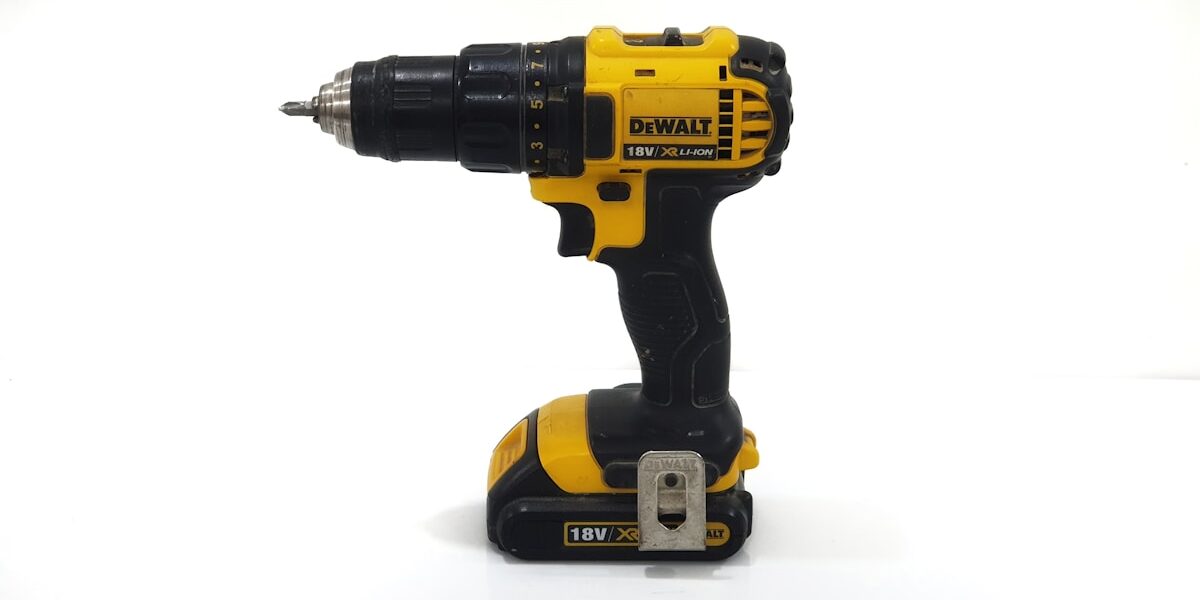
Understanding the DeWalt Impact Drill
DeWalt impact drivers have gotten less clear-cut with all the models, brushless versus brushed debates, and platform compatibility questions flying around. Today, I will share it all with you.

The impact driver is the tool I’d tell any woodworker or builder to buy before almost anything else in their cordless lineup. It drives screws faster, with less effort, and with less cam-out than a standard drill. Once you’ve used a good impact driver for a building project, going back to a drill for screw driving feels like driving with the parking brake on.
What is an Impact Drill?
Despite the common name “impact drill,” these tools are technically impact drivers. What they do exceptionally well is drive fasteners, because the hammering action delivers torque in rapid bursts rather than the continuous twisting force a drill produces. The key practical benefit is that you can drive 3-inch deck screws all day without your wrist fatiguing, because the impact mechanism absorbs the torque reaction rather than transferring it to your arm.
How DeWalt Impact Drills Work
Inside the tool, a spring-loaded hammer mechanism rides on the motor’s output shaft. When the fastener encounters resistance, the hammer engages and begins striking the anvil in rapid successive blows. Each blow delivers a burst of rotational force far beyond what the motor alone could produce continuously. The tool automatically disengages the impact mechanism for light loads and engages it when resistance increases, so you get smooth driving at the start and burst force as the fastener seats.
Features of the DeWalt Impact Drill
The brushless motor is the most significant upgrade in the recent DeWalt lineup. Brushless motors run cooler, last longer, and use battery power more efficiently. The real-world result is more runtime per charge and a tool that keeps working at full power deeper into a battery charge. Variable speed control lets you match the driving speed to the application — I’m apparently a guy who drives screws at full speed into everything and wonders why I occasionally strip the head, so having multiple speed settings has genuinely helped my work quality. The LED work light illuminates the work zone well, and stays on briefly after you release the trigger to give you time to check your work.
The Benefits of Using a DeWalt Impact Drill
Speed is the headline benefit — an impact driver drives a 3-inch screw in about a third of the time a regular drill takes, without the cam-out risk. The compact design of most impact drivers means they fit into tighter spaces than standard drills. Battery platform compatibility across DeWalt’s 20V MAX line means your impact driver battery works in your circular saw, drill, oscillating tool, and everything else in the system.
Applications of DeWalt Impact Drills
In a woodworking context, impact drivers excel at pocket hole joinery — driving Kreg screws into pocket holes quickly and consistently. They’re excellent for knockdown furniture assembly with confirmat screws or Euro-style hardware. Any construction-adjacent woodworking benefits enormously from impact driving speed and power. What I don’t use an impact driver for: driving wood screws in thin hardwood where splitting is a risk, or drilling where accuracy matters. For those I reach for a regular drill — the two tools complement each other.
Popular DeWalt Impact Drill Models
The DCF885 is the classic entry point — compact, 1/4-inch hex chuck, 1,400 in-lbs of torque, and proven reliability. If you’re buying a first impact driver and want to stay in the DeWalt 20V MAX system, this is a sensible starting choice. The DCF887 is where I’d point anyone willing to spend a bit more — brushless motor, three speed settings including precision drive mode, and 1,825 in-lbs of torque. The precision drive mode is what I use daily for furniture work: it lets me drive small screws without blowing the head in. The DCF809 is the compact option for tight-space work, fits into spaces where standard models won’t.
Maintenance Tips for DeWalt Impact Drills
Blow out the vents with compressed air periodically to prevent dust accumulation. Workshop dust gets into everything, and keeping the vents clear extends motor life. Clean battery contacts with a dry cloth when they start to look dirty — poor contacts reduce runtime. Store batteries at partial charge in a moderate temperature environment; the 50-70% charge range is optimal for long-term storage. DeWalt’s fuel gauge on larger batteries lets you check charge state before putting them away.
Conclusion
The DeWalt impact drill stands as a testament to the brand’s commitment to quality and innovation. With the right impact driver, both professionals and hobbyists can tackle fastening tasks with confidence, efficiency, and speed — whether you’re assembling furniture, building shop fixtures, or tackling larger construction projects.



Stay in the loop
Get the latest the workshop journal updates delivered to your inbox.