
Freshwater fishing has a technique for nearly every situation you’ll encounter — different water types, different seasons, different target species. The anglers I know who catch fish consistently aren’t the ones with the most expensive gear; they’re the ones who’ve taken time to understand several techniques well enough to pick the right one for the day. Here’s a practical rundown of the methods that actually move the needle.
This article includes affiliate links. We may earn a commission at no extra cost to you.
Bait Fishing
Bait fishing is where most people start, and it remains one of the most effective approaches across all skill levels. The core of it is using something natural — something the fish already recognizes as food — to get a bite. Common choices break down like this:
- Worms: Nightcrawlers and red worms work on almost everything. Hook through the middle for a natural wriggling presentation.
- Minnows: Best for larger predatory species — bass, pike, walleye. Rig through the lips for slow presentations, through the back for more movement near the surface.
- Insects: Crickets, grasshoppers, and mealworms are genuinely effective for panfish, crappie, and trout in streams.
The mechanics are straightforward: bait the hook, add enough weight to get it down to where the fish are, cast and watch your bobber. But depth selection matters. If fish are suspended at 8 feet and your bait is sitting at 3, you’re not going to get bit. Set your bobber depth based on what you know about where that species holds in that body of water.
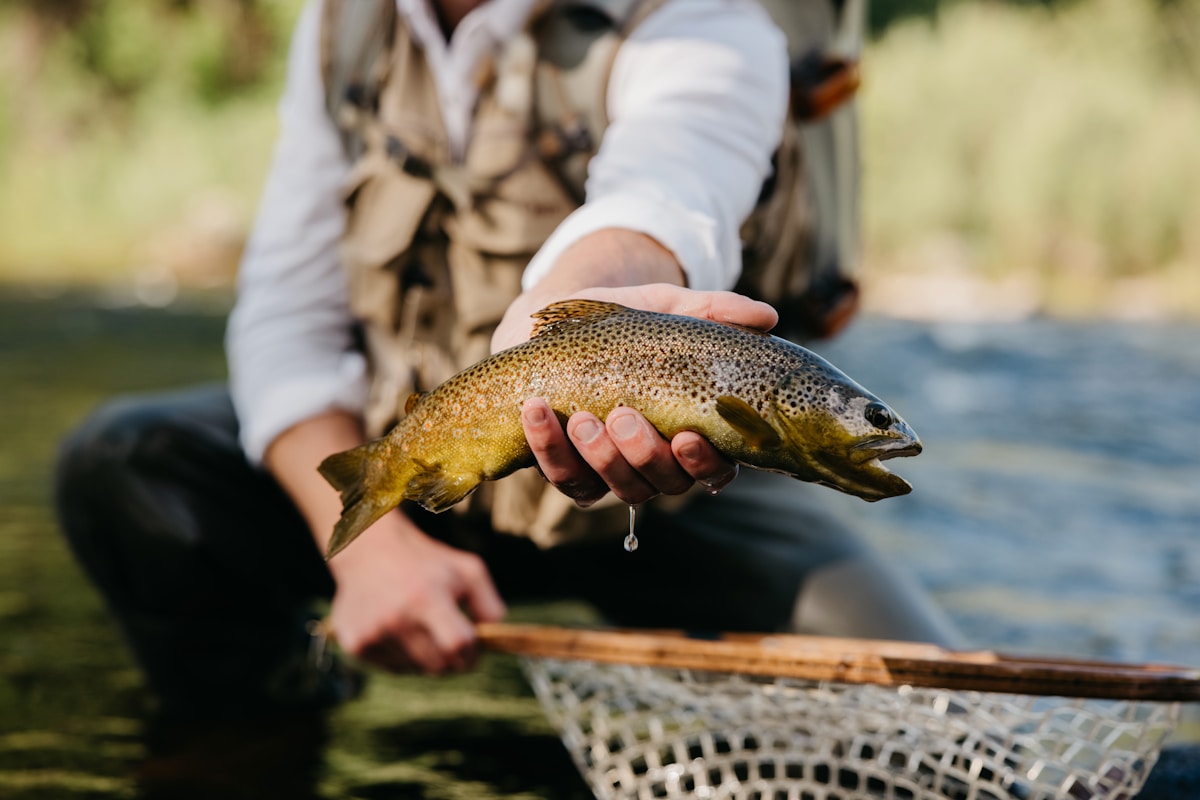
Fly Fishing
Fly fishing requires specialized equipment and a casting technique that takes real practice to develop — but the learning investment pays off, especially if you spend time on moving water. The fundamental difference is that you’re casting the weight of the line itself rather than the weight of the lure. That’s what allows you to present a nearly weightless fly naturally on the current.
The three main fly categories cover different feeding situations:
- Dry flies: Float on the surface and imitate adult insects hatching or resting. When trout are rising to a hatch, a well-placed dry fly on the right pattern is spectacular.
- Nymphs: Fished subsurface to imitate immature insects. This is what trout eat the majority of the time — nymphing accounts for more fish than any other fly technique by a wide margin.
- Streamers: Larger patterns that mimic baitfish, leeches, or crayfish. Stripped fast or swung on the current, they trigger reaction strikes from bigger fish.
Watch the water before you start casting. Identify rising fish, notice what insects are on the surface, and choose your fly to match. Timing and accuracy matter more than distance.
Lure Fishing
Lure fishing is where technique and presentation really separate anglers from each other. The lure itself does a lot of work, but how you retrieve it determines whether fish commit or just follow it in. Key lure types:
- Spinnerbaits: The spinning blades create vibration and flash that bass and pike can’t resist in stained water. Keep one tied on whenever conditions get murky.
- Crankbaits: Designed to run at specific depths. Great for covering structure quickly and triggering reaction bites on active fish.
- Plastic worms and soft plastics: The most versatile category. Texas rig, Carolina rig, drop shot — each changes how the bait moves and where it sits in the water column.
- Jigs: Excellent for bottom contact and deep water. Drag them slowly, lift and fall — the falling action is usually what triggers the bite.
The retrieve is everything. Change your speed, add pauses, twitch the rod tip. An erratic retrieve often outperforms a steady one because it mimics an animal that’s struggling.
Trolling
Trolling covers water efficiently. Pull lines behind a moving boat at varying depths and speeds until you locate active fish, then slow down and work the area. The ability to run multiple lines at once — at different depths and with different lures — multiplies your odds of finding what depth and presentation the fish are responding to on a given day.
- Use multiple lines: Cover different depths simultaneously.
- Vary depth: Use weights, downriggers, or diving planers to control how deep each line runs.
- Adjust speed: Most trolling lures have a sweet spot between 1.5 and 2.5 mph.
Bottom Fishing
Bottom fishing is the right technique when you’re targeting species that live and feed near the substrate — catfish, carp, larger perch, walleye at certain times. A simple Carolina rig or egg sinker rig keeps bait on the bottom where it needs to be. Cast to structure — the base of a drop-off, a channel edge, a submerged log pile — and let the bait sit. Bottom fishing rewards patience but doesn’t require constant attention, which makes running multiple rods practical.
Drift Fishing
Drift fishing uses current to move your presentation naturally through an area without constant casting. In rivers, the current does the work — you control the drift’s speed and depth with weight and line management. The key is keeping bait near the bottom in the feeding lanes where fish hold against the current. It’s probably the most effective technique for river steelhead and salmon and also works well for river walleye and catfish.
Float Fishing
Float fishing — using a bobber or float to suspend bait at a precise depth — is deceptively effective and honestly one of the most satisfying techniques to watch work. When a float twitches and slides sideways before going under, it never gets old. The float gives you two things: bite indication and depth control. Set it correctly for the target species and you’ll be presenting bait exactly where fish are feeding.
For bluegill, crappie, and perch, a small slip float with a split shot and live bait on a #6 hook is a complete setup that catches fish reliably. Upgrade to a longer, more sensitive Thill-style float for stealthy presentations in clear water.
Ice Fishing
Ice fishing is its own world. You’re working a small hole in the ice, usually jigging straight down or deadsticking with live bait. The technique set is condensed but the variables — depth, cadence, lure size, location — are just as meaningful as open-water fishing. Key points:
- Drill multiple holes: Start with a grid and hop holes until you find fish on your electronics.
- Use ice-specific jigs: Small tungsten jigs in 1/16 to 1/8 oz for panfish, larger for walleye and pike.
- Check ice thickness: 4 inches minimum for a single person on foot. Don’t guess.
- Dress in layers and bring a shelter: Cold and wet erodes focus faster than anything.
Float Tube Fishing
A float tube — an inflatable personal watercraft you sit in while kicking around with fins — accesses water that shore anglers and even boats can’t reach quietly. You can position yourself right at a weed edge, work a shallow flat from inside the cover rather than casting into it, and move around almost silently. That last part matters. Fish that spook from a boat motor or a splashy cast will stay calm around a float tube angler moving slowly.
It requires a PFD at all times and attention to weather — you’re not fast in a float tube and you don’t want to be caught far from shore when conditions change.
The right technique for any given day depends on species, conditions, and water type. The anglers who develop fluency across multiple methods — who can pivot from lure fishing to bait fishing, from drift fishing to jigging, based on what the water is telling them — are the ones who rarely come home skunked. Start with one or two techniques, get genuinely comfortable with them, then add more. That’s how this sport builds.


Stay in the loop
Get the latest the workshop journal updates delivered to your inbox.