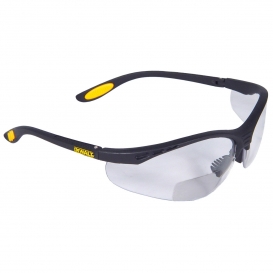
Today, I will share it all with you.
This article includes affiliate links. We may earn a commission at no extra cost to you.
Understanding Kickback
Kickback is when the blade catches the workpiece and throws it back at you — and if you haven’t experienced it, you don’t want to. On a table saw, a board can launch at 100+ miles per hour. That’s faster than a major league fastball and with considerably more mass. The board goes through whatever’s in its path, including your chest, face, or stomach.
Kickback happens three ways. First, the workpiece pinches the blade when the cut closes due to internal wood tension — this is the most common cause and the one that sneaks up on you with seemingly stable stock. Second, the workpiece lifts off the table and contacts the rising teeth at the back of the blade. Third, the workpiece twists away from the fence and contacts the back of the blade. Understanding which one is happening helps you prevent it systematically rather than just being more cautious in some vague, unspecific way.
Prevention starts with a properly aligned blade and fence. The fence must be parallel to the blade — not parallel to the miter slot, parallel to the blade itself. Use a dial indicator or precision ruler to verify this relationship. Even 1/32″ out of parallel at the back of the blade creates a wedge that pinches during cuts.
A riving knife is your primary kickback prevention device. This thin fin behind the blade keeps the kerf open and prevents the workpiece from contacting the back teeth. Never remove the riving knife. The riving knives on modern saws move with blade height adjustments and maintain their position relative to the blade tooth arc. Older-style splitters that don’t track with the blade require more careful alignment and checking. Riving knives are superior in every way — if your saw doesn’t have one, that’s worth addressing.
Safe Cutting Technique
Stand to the side of the blade, not directly behind it. If kickback occurs, the projectile passes beside you instead of through you. This simple position change requires no special equipment and has saved lives.
Use push sticks for any cut where your hands would be within 6 inches of the blade. The MICROJIG GRR-RIPPER GR-100 3D Pushblock is a significant upgrade over basic push sticks — it grips the workpiece from three sides and prevents kickback while keeping your hands completely clear of the blade. I’m apparently someone who keeps a half-dozen push sticks staged around the table saw at any given time, and that redundancy works for me while having just one around never quite solved the problem of reaching for it with a hand already in motion.
Never reach over or behind the blade while it’s spinning. Complete the cut, let the blade stop, then retrieve your workpiece. For narrow rips, use a push stick and a featherboard to hold the workpiece against the fence. The featherboard applies constant pressure while keeping your hands away from the blade path entirely.
Blade Selection for Safety
Dull blades cause burning, increased feed pressure, and higher kickback risk. Replace or sharpen blades before they reach this condition. A sharp blade cuts cleanly with minimal pressure — if you’re forcing the workpiece, something is wrong with the blade or the setup.
Match the blade to the cut. Ripping blades have fewer teeth with deep gullets for efficient chip clearing in long-grain cuts. Crosscut blades have more teeth for clean cuts across the grain. Using a ripping blade for crosscuts or vice versa increases the effort required and the likelihood of problems. A combination blade handles both adequately if you’re only running one blade, but purpose-matched blades outperform combinations at their specific tasks.
Blade stabilizers reduce vibration, improving cut quality and reducing stress on the arbor. They’re inexpensive insurance for both safety and performance on thin or warped blades.
Dust: The Invisible Hazard
Fine wood dust causes respiratory disease. Exotic hardwoods, plywood, and MDF contain chemicals that compound the danger. Long-term exposure causes permanent lung damage, cancer, and death. This is not a theoretical concern — it’s the documented outcome of woodworking without dust protection over a career.
Every power tool needs dust collection. A 4-inch main line with drops to each machine handles most home shops. Minimum air velocity is 4,000 feet per minute to keep dust moving through the lines rather than settling and clogging. Undersized ducts fail to capture dust at the source, which means you’re just moving the dust problem rather than solving it.
Wear respiratory protection even with dust collection running. 3M 8210 N95 Particulate Respirators catch particles down to 0.3 microns for general shop work. For serious work with exotic hardwoods or MDF, a half-mask respirator with P100 cartridges provides more complete protection. Replace cartridges according to manufacturer schedules — cartridges that are past their useful life don’t provide the protection they appear to.
An ambient air cleaner running continuously filters shop air and catches what escapes the primary collection system. Size the cleaner for your shop volume — the goal is at least one complete air exchange every 5 minutes.
Making Safety Automatic
Safety isn’t something you think about every time. It’s something you build into your habits until the safe way is just the way. Check the riving knife before every session. Test the dust collector before starting work. Position yourself beside the blade path without conscious thought.
When you’re tired, stop. When you’re rushing, slow down. When something feels wrong, trust your instincts and figure out why before proceeding. The shop will be there tomorrow. Make sure you will be too.


Stay in the loop
Get the latest the workshop journal updates delivered to your inbox.