Workshop accidents happen in seconds. The response in the following minutes determines whether an injury becomes a minor setback or a major crisis. Every shop needs proper first aid equipment, knowledge of when to use it, and clarity on when professional medical care is required.
The Eye Wash Station
Chips, dust, and finish splashes hit eyes constantly in woodworking. Most are minor irritations that clear naturally. Some are not. Splashes of chemical finish, fine metal particles, or contaminated debris require immediate flushing with clean water for a minimum of 15 minutes.
A wall-mounted eye wash station provides the volume and duration needed. Look for units with at least 16 ounces of sterile saline per eye and integrated mirrors for self-treatment. Position the station near chemical storage and finishing areas, at a height you can reach with eyes closed.
In smaller shops, sealed eye wash bottles provide emergency treatment until you can reach a sink. Replace these annually as the saline loses sterility over time. Check expiration dates monthly.
For serious eye injuries, flush continuously and get to an emergency room immediately. Don’t remove embedded particles yourself. Cover the eye gently and let professionals handle extraction.
Recommended: The MAASTERS 8 Gallon Wall Mount Eye Wash Station is OSHA-approved with a mirror and dual spray heads for emergency eye washing.
Wound Care Essentials
Cuts are inevitable. The shop first aid kit must handle everything from minor nicks to serious lacerations. Stock these items at minimum:
Bandages in multiple sizes: butterfly closures for small cuts, 2″ x 4″ gauze pads for larger wounds, rolled gauze for wrapping. Include self-adhesive wrap that holds gauze without tape on hairy arms.
Antiseptic for cleaning wounds. Iodine swabs or chlorhexidine wipes prevent infection in the dirty shop environment. Hydrogen peroxide bubbles dramatically but is less effective than modern antiseptics.
Gloves, multiple pairs, for treating your own wounds or helping others. Blood-borne pathogen protocols apply even in home shops.
Tourniquet and bleeding control supplies for severe arterial bleeding. A CAT tourniquet or similar device stops limb bleeding when direct pressure fails. Know how to use it before you need it.
Recommended: The North American Rescue CAT Gen 7 Tourniquet is military-issued and the official tourniquet of the U.S. Army since 2005.
When Professional Care Is Required
Seek immediate medical attention for: arterial bleeding (bright red, spurting), deep cuts that don’t stop bleeding with pressure, any wound that exposes bone or tendon, embedded objects that penetrate deeply, and any eye injury beyond simple debris.
Seek same-day medical attention for: cuts that might need stitches (generally over 1/2″ long or with separated edges), puncture wounds, burns larger than a quarter, and any wound that shows signs of infection within 24 hours (increasing redness, warmth, swelling, or pus).
For severe injuries, call 911 before administering first aid if alone. If someone else is available, one person provides care while the other calls for help. Don’t transport serious injuries yourself if an ambulance can reach you faster than you can reach the hospital.
Burn Treatment
Hot tools, friction, and chemical finishes cause burns. For thermal burns, cool the area immediately under running water for 10-20 minutes. Don’t use ice, which can cause additional tissue damage. Cover with a sterile non-stick dressing.
Chemical burns require extended flushing. Water for 20+ minutes, then continue until you reach medical care. Remove contaminated clothing while flushing. Don’t neutralize acids with bases or vice versa. Just flush with water.
The Complete First Aid Kit
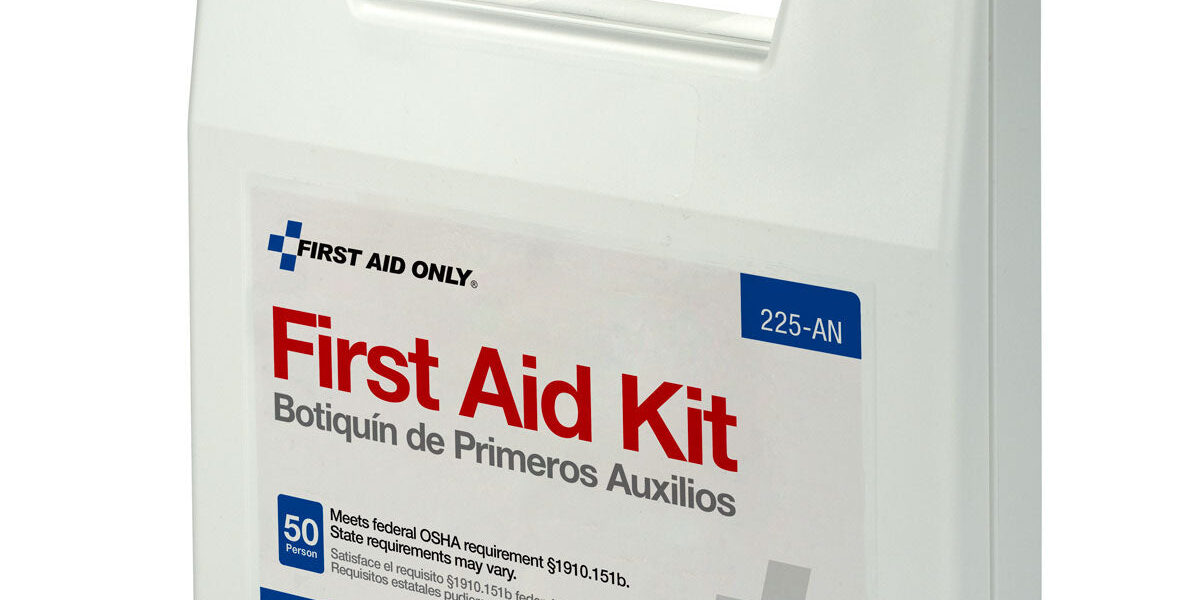
Commercial kits provide a starting point but often lack shop-specific items. Supplement with: splinter tweezers with magnification, instant cold packs, aspirin (for heart attack symptoms), burn gel packets, and a printed first aid guide.
Mount the kit in a visible location, marked clearly. Not inside a cabinet. Not behind tools. Right there on the wall where panicked, injured hands can find it instantly. Check contents quarterly and replace used or expired items immediately.
Recommended: The 200-Piece Metal Case First Aid Kit is OSHA compliant and designed for job sites, workshops, and construction environments.
Training Matters
Equipment without knowledge is nearly useless. Take a basic first aid and CPR course. The Red Cross and American Heart Association offer them regularly. Learn to recognize serious conditions, perform effective treatment, and make good decisions under stress.
Post emergency numbers: local emergency services, poison control (1-800-222-1222), and the nearest hospital. When you’re injured and stressed, you won’t remember numbers you knew yesterday.
First aid preparation is the safety measure you hope to never use. But the one time you need it, nothing else matters. Build the capability now, before that moment arrives.
As an Amazon Associate, we earn from qualifying purchases.


Stay in the loop
Get the latest the workshop journal updates delivered to your inbox.