Best Router Table
Router tables have become tricky with all the insert plate upgrades, fence systems, and debates about building your own versus buying ready-made flying around. As someone who built a router table from scratch, used it for a few years, and then upgraded to a commercial unit — and can tell you exactly what I wish I’d known at the start — I dug into the practical details of what matters in a router table setup. Today, I will share it all with you.

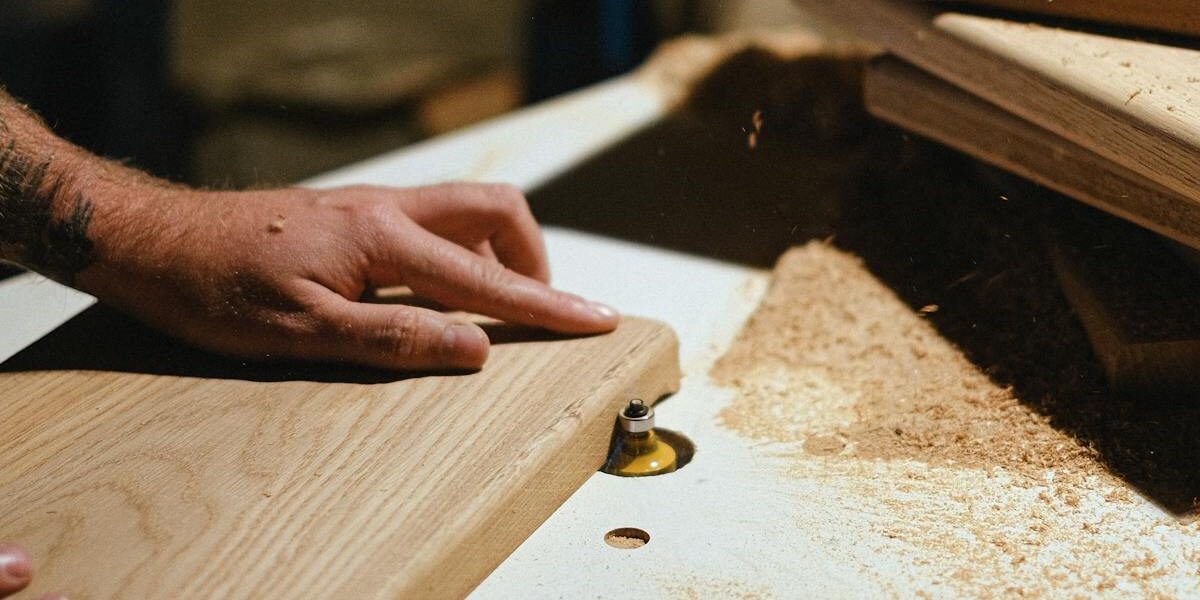
The router table transforms a handheld router into a stationary shaper. Bits stay fixed; the workpiece moves. That reversal of motion changes what you can do with a router fundamentally — you can run long, consistent profiles on narrow pieces that would be dangerous with a handheld router, you can make repeated identical passes with a stop block, and you can use large panel-raising and joinery bits that require the stability of a table-mounted setup.
Benefits of a Router Table
Control is the headline benefit. With a handheld router, you’re pushing the tool around and maintaining consistent depth requires concentration. With a table-mounted router, the depth is fixed, your hands stay above the work, and you just need to feed the piece smoothly along the fence. The repeatability is the other thing — run 50 drawer front profiles and they all come out identical because nothing in the setup changes between pieces.
Key Features to Look For
The table surface is the foundation of everything. It needs to be flat — not approximately flat, actually flat. A surface that’s cupped or crowned will cause your workpieces to rock as they cross the table, which shows up as inconsistency in the profile depth. MDF and phenolic resin tops are the standard materials, both capable of excellent flatness. Check the table with a machinist’s straightedge before buying if you can, or read reviews specifically about flatness.
The fence is where most of your accuracy comes from. A good fence is rigid, adjusts smoothly, has a reliable locking mechanism that doesn’t shift when you tighten it, and has dust collection built in so the chips don’t accumulate in the cut zone. Adjustable MDF face plates on either side of the bit opening let you close up the opening for small bits and open it for larger ones.
Dust collection cannot be an afterthought on a router table. Routing generates volumes of fine chips and dust, and without extraction right at the bit, it covers your workpiece, the fence, and eventually you. A port in the fence and a port below the table, both sized for standard shop vacuum or dust collector hose, handles the dust problem effectively. The fence port is more important for profile routing; the table port matters more for through-cuts.
Compatibility with your router is the practical requirement to check before anything else. Most tables have a standard insert plate size, but the router mounting holes vary by manufacturer. The table should either come with a pre-drilled plate for your router or include a blank plate that you drill yourself. Check this before ordering.
Top Router Tables on the Market
Bosch Benchtop Router Table RA1181
The Bosch RA1181 is where a lot of woodworkers land for a first quality router table. The aluminum top is flat and large enough for most work, the adjustable aluminum fence handles well, and it comes ready to use with your router. The pre-drilled mounting holes fit common Bosch routers and many other brands. The dust collection works reasonably well with a shop vacuum. It’s been a popular recommendation for years because it delivers consistent results without requiring much setup expertise.
Kreg PRS2100 Bench Top Router Table
The Kreg PRS2100 is the step up I’d recommend for anyone doing serious routing work. The insert plate leveling system uses three precision leveling screws that make getting the plate flush with the table surface fast and reliable — this matters more than it seems until you’ve fought with a plate that won’t sit quite right. The high-pressure laminate top resists warping well. Kreg’s build quality throughout is solid, and the fence is notably good.
Bench Dog Tools 40-102 ProMax Cast Iron Router Table Extension
The Bench Dog ProMax takes a different approach: it’s an extension wing designed to mount to a cabinet table saw, turning the saw into a combined ripping and routing station. The cast iron top is the flattest you’ll find short of a machined reference surface, and that flatness translates directly to routing accuracy. The ProFence system is well-made. The caveat is that this only makes sense if you have a compatible cabinet saw, but if you do, it’s an elegant use of space.
Bosch Cabinet Style Router Table RA1171
The RA1171 is the enclosed cabinet version from Bosch, and the enclosed base is worth something — it contains the dust that escapes the fence collection port and makes cleanup much easier. I’m apparently someone who underestimated how much routing dust escapes the collection system and ends up on the floor, and the enclosed cabinet version addresses that more effectively than an open stand. Good option if you’re doing production routing work where dust management matters.
Skil RAS900 Router Table
The Skil RAS900 is the budget option that actually delivers functional results. The MDF top is flat enough for most work, the fence adjusts acceptably, and the foldable legs make it storable in small shops. For someone who needs a router table occasionally and isn’t ready to commit to a full-priced unit, this works. Don’t expect professional-grade precision, but for rabbets, roundovers, and basic profile work, it gets the job done.
Router Table Safety Tips
Always feed against the rotation direction — the bit should be spinning toward you on the infeed side, pushing the workpiece against the fence. Feeding in the same direction as rotation causes climb cutting, where the bit pulls the workpiece instead of pushing against it, which can be violent and dangerous. Use featherboards to keep consistent pressure on the workpiece against the fence and table surface. Push blocks and push sticks keep your hands away from the bit opening.
Maintaining Your Router Table
Keep the table surface waxed. Paste wax applied to the table top and fence face reduces friction, keeps the surface clean, and makes workpieces slide more smoothly. I do this every few months and after any finishing work where overspray might have contaminated the surface. Check the insert plate level regularly and readjust the leveling screws if the plate has shifted relative to the table surface. A plate that’s high will catch workpieces; one that’s low will cause profile inconsistency.
Conclusion
A router table is one of those shop investments that changes what you make, not just how you make it. Profiles, edge treatments, joinery, and raised panels all become accessible at a router table that would be difficult or dangerous freehand. Pick a table that fits your budget and use frequency, invest in a quality fence system, and get the dust collection working before you start routing. Those three things determine 90% of how much you’ll enjoy using the tool.

Stay in the loop
Get the latest the workshop journal updates delivered to your inbox.