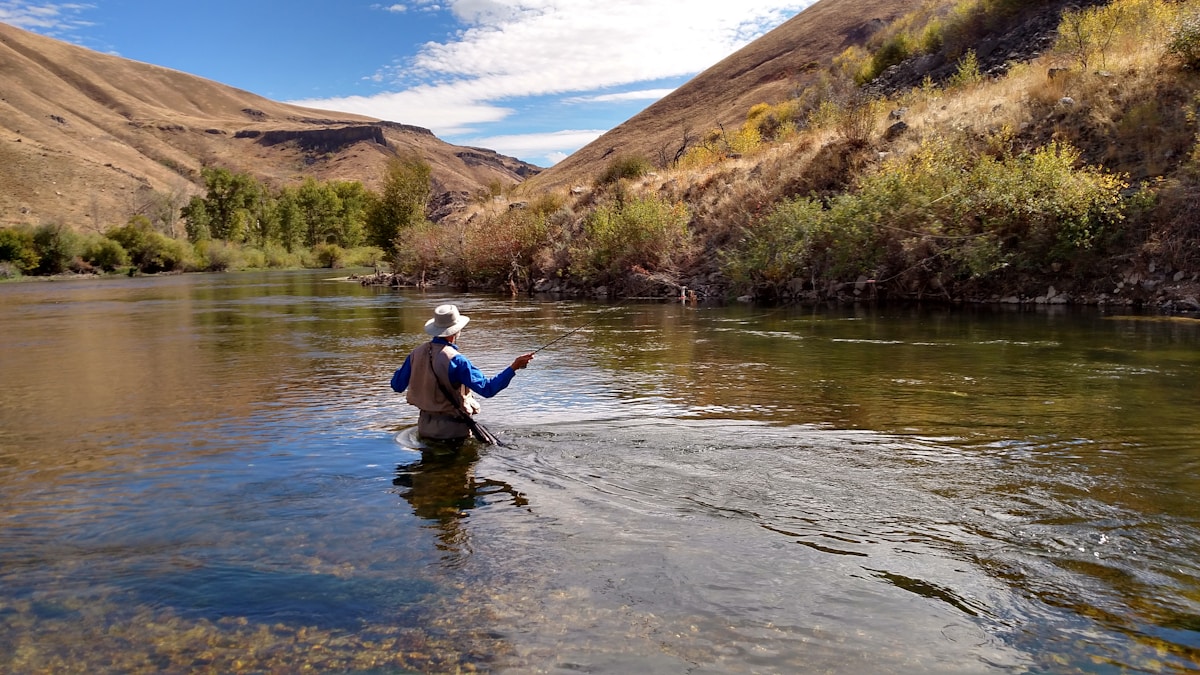
Finding good fishing spots has gotten both easier and harder in the last decade. Easier because we have mapping apps, satellite imagery, fish finders, and more online information than anyone could read in a lifetime. Harder because so much of that information is generic, wrong, or applies to water three states away from where you’re standing. As someone who’s scouted new water my whole life — sometimes successfully, sometimes not — here’s what I’ve found actually works.
Start with Local Research Before You Go Anywhere
Your state fish and wildlife agency is an underused resource. Most of them publish stocking reports, species surveys, and access information that’s genuinely useful. Some states have interactive fishing maps with species-by-body-of-water data. This isn’t sexy information but it’s accurate and it tells you where the fish actually are rather than where someone on Reddit thinks they are.
Local fishing forums and Facebook groups for specific lakes or rivers are also worth time. People post actual recent catches with location details. The signal-to-noise ratio is low, but the signal that’s there is real. Use it alongside official data, not instead of it.
Talk to the People at the Local Bait Shop
The person behind the counter at a bait shop has been watching anglers come in and out for years. They know what’s been caught recently, what bait is working, and they’ll usually give you a general area without much prompting.
Go in, buy something you need anyway, and ask. Be specific about what you’re after — “I’m fishing for walleye this weekend, do you know if they’re hitting in the evening or morning?” gets a better answer than “where should I fish?” Most experienced anglers are genuinely happy to help if you’re respectful about it.
Find Structure
This is the core principle that underlies everything else. Fish relate to structure — they use it for shelter, ambush points, temperature regulation, and finding food. In a lake, structure means: points and humps that rise from the bottom, weed edges where vegetation meets open water, submerged timber, rocky shorelines, channel edges, dock pilings, bridge abutments, and creek mouths. In rivers: current breaks, undercut banks, eddies behind rocks, deep bends, and log jams.
When you’re on new water, use a topo map or LakeMaster chart to identify bottom contour. Where there’s a depth change — a ledge, a hump, a drop-off — fish will often stack up, especially at transition times of day. Cross that with a fish finder and you can locate active fish quickly instead of guessing.
Use Technology Smartly
A fish finder is worth what you put into learning to read it. At minimum it shows you depth and bottom composition and marks fish. A quality unit like the Humminbird HELIX series or Garmin Striker shows side imaging and structure detail that fundamentally changes how you read water. That said, the best tech in the world doesn’t help if you’re scanning the wrong part of the lake.
Navionics and LakeMaster apps for your phone give you detailed lake maps with depth contours before you ever launch the boat. You can identify structure, mark waypoints, and plan your approach at home the night before. That preparation time translates directly into more time fishing productive water instead of blindly covering the lake.
Understand Seasonal Patterns
Fish don’t stay in the same place year-round, and the best spot in May might be dead in August. In spring, fish push shallow to spawn — look for them in warming flats and near spawning gravel. Post-spawn they pull back to deeper adjacent structure. Summer finds them suspending over deep structure or holding near heavy cover in hot midday periods. Fall triggers feeding frenzies in the shallows as fish fatten up for winter. Winter concentrates fish in the deepest, warmest water they can find.
Understanding where fish should be at a given time of year based on their seasonal patterns lets you approach new water with a hypothesis instead of just guessing. You won’t always be right, but you’ll be right more often.
Read the Water Conditions on Site
Once you’re there, observe before you cast. Water clarity tells you how far fish can see and how you should approach. In clear water, fish spook easily — long casts, natural colors, lighter line. In murky water, vibration and bright colors matter more because fish are hunting by feel.
Water temperature is worth checking too. Bass get lethargic below 50 degrees. Trout get stressed above 65. Knowing the temperature tells you something about how actively fish are feeding and at what depth they’re likely to be holding.
Weather and Time of Day
Overcast days consistently produce better fishing than bluebird sunny days — the reduced light penetration makes fish less wary and more willing to move. The hour after a cold front passes is often tough; the period leading up to a front, when pressure is dropping, is often excellent.
Early morning and late evening are nearly always the best times. Midday in summer is usually the worst, especially for bass. Dawn and dusk on a cloudy day in September is about as good as it gets for a lot of species. If you can only fish a few hours, make them the right few hours.
Explore Off the Beaten Path
The most-fished spots aren’t always the best spots. Pressure turns fish cautious and selective. A smaller, harder-to-access pond or stretch of river that most anglers skip can fish better on a consistent basis than the famous public access point. Hike in. Take the extra boat ride. Follow the shoreline past the obvious stuff.
I’ve found some of my favorite fishing by simply going further than I thought was worth going and turning out to be wrong about that.
Keep a Log
Document what you find — location, conditions, species, what worked. Over two or three seasons those notes become a genuinely valuable resource. Patterns emerge that you’d never notice trip to trip. The spot that always produces on a south wind in late May. The drop-off that goes cold after the first hard frost. A good log turns experience into repeatable results.
One more thing: regulations vary by body of water and change year to year. Check them before you fish new water. Permits, access rules, slot limits — none of it takes long to look up, and it protects both the fishery and you.




Stay in the loop
Get the latest the workshop journal updates delivered to your inbox.