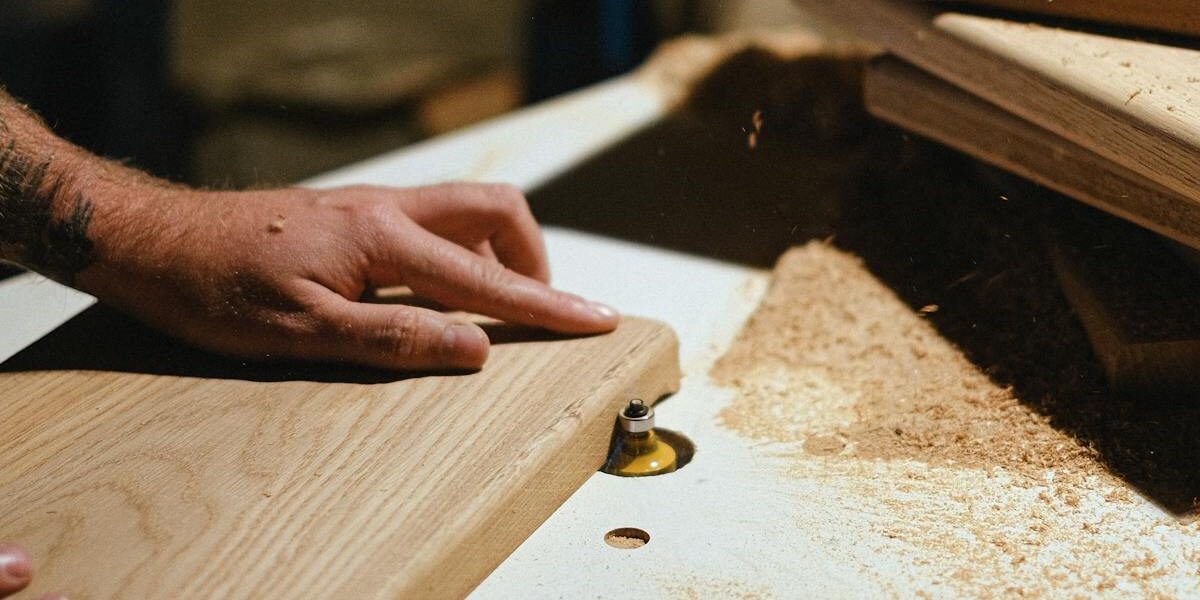
Oliver Planer
Oliver Planer
Planers have changed quite a bit thanks to the brands and feature lists flying around. Today, I will share it all with you.

History of Oliver Machinery
Oliver Machinery was founded in 1890 by Joseph W. Oliver, and the company built a reputation for precision and reliability over more than a century of continuous operation. Early Oliver planers were known for the same qualities the machines have today: robust cast iron construction, consistent performance, and engineering that prioritized durability over cost-cutting.
Through the 20th century, Oliver continued refining their designs with better materials and more precise manufacturing. The commitment to quality that characterized the early machines carried through every generation of product, which is why you still find Oliver planers from the 1940s and 1950s in active production shops today — not as museum pieces, but as working tools.
Key Features of Oliver Planers
The construction quality is the most immediately apparent characteristic. Oliver planers use high-quality cast iron for the beds, tables, and major structural components — cast iron provides thermal and vibration damping that lighter machines simply can’t match. That stability translates directly into smoother cuts and more consistent surface quality. Precision is built into the design: flat infeed and outfeed tables, accurate depth adjustment mechanisms, and well-engineered cutterhead geometry produce surfaces that require minimal sanding before finishing.
Ease of use is another genuine strength. Controls are intuitive, blade changes are straightforward, and the overall ergonomics are considered. I’m apparently someone who has struggled with poorly-designed blade change systems on cheaper machines and wasted significant time on a simple maintenance task. Oliver’s quick-change knife systems on their modern models make blade replacement a routine ten-minute job rather than a frustrating ordeal.
Material and Build Quality
The cast iron construction reduces vibration during operation, which affects surface quality in a way that’s immediately visible in the finished surface. High-frequency vibration leaves chatter marks — slight ridges in the planed surface that require additional sanding. A heavy, well-damped machine running properly-sharpened knives produces surfaces that go directly to finish sanding with little intermediate work needed. The build quality also means less wear on moving parts over time, which translates to longer service life and lower maintenance cost per year of use.
Precision Engineering
Adjustable infeed and outfeed tables that maintain co-planarity with the cutterhead are essential for accurate thickness work. Oliver’s attention to this detail means that the surface you present to the cutterhead at the infeed end matches the surface at the outfeed — critical for avoiding snipe (the slight deeper cut at the beginning and end of a board) and for processing boards that need to be exactly the specified thickness. The depth adjustment increments are fine enough for precision dimensioning.
User-Friendly Design
Oliver planers are designed to be comfortable to use, with controls at sensible heights, feed mechanisms that don’t require awkward postures, and chip collection that keeps the work area clear. The reduced fatigue over a long session adds up to meaningfully better work quality and a less exhausted woodworker at the end of the day.
Popular Oliver Planer Models
The Oliver 4220 is the heavy-duty production model — built for large-scale projects and professional shops that run the machine daily. Excellent precision, designed for the long term. The Oliver 4240 is the versatile mid-range option, suitable for both professional and serious hobbyist use, combining robust construction with user-friendly features. The Oliver 4455 is the high-end flagship with digital readout for precise thickness settings — the choice for operations where exact dimensioning is critical and repeatability from session to session matters.
How to Maintain an Oliver Planer
Regular cleaning after each use prevents chip and dust accumulation in the feed rollers and cutterhead area, which affects performance over time. Use a vacuum and air to clear debris from the machine before anything else. Lubricate the moving parts per the maintenance schedule in the manual — the specific points and intervals are machine-dependent and doing it right protects the investment. Blade inspection and maintenance is the most important ongoing task: dull knives produce torn rather than cut surfaces, burn marks on hard wood, and snipe more pronounced than properly-sharp knives would cause. Check blades frequently in production use and sharpen or replace on a consistent schedule.
Benefits of Using an Oliver Planer
Quality, efficiency, and versatility are the three words that come up consistently in discussions among Oliver owners. The quality shows in the surface finish: a properly tuned Oliver leaves surfaces that are genuinely ready for fine finishing with minimal intermediate work. The efficiency shows in the time savings from reliable, repeatable performance — you set up once and process a batch of parts knowing they’ll all come out to the same thickness. The versatility across different wood species and thicknesses means one machine handles the full range of dimensioning work in a shop.
Tips for Choosing the Right Oliver Planer
Match the machine to the scale and frequency of your work. The 4220 is overkill for a hobbyist shop; the 4240 is a better fit. If you’re doing production work and run the machine daily, the heavier-duty model pays for itself in reliability and reduced downtime. Budget matters — Oliver planers are investments, not commodity purchases — but buy the right capacity rather than compromising on size to save money. The wrong size machine for your work creates either underutilization or a bottleneck. Read reviews from woodworkers who’ve owned the specific model for several years; long-term ownership experience reveals things that short-term reviews miss.



Stay in the loop
Get the latest the workshop journal updates delivered to your inbox.