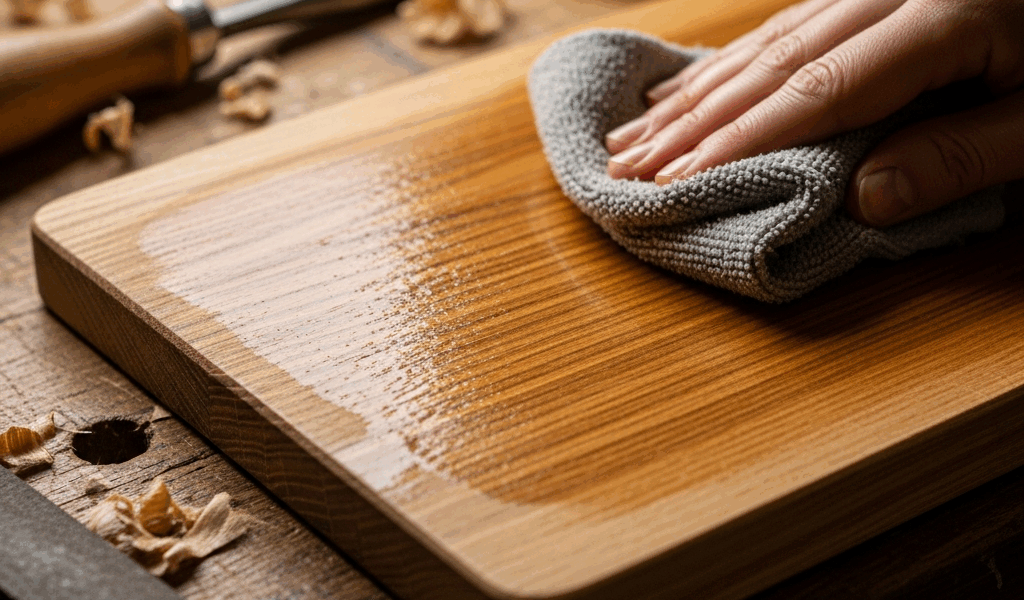
You picked up a can labeled “teak oil” at the hardware store and assumed it was made from teak or specifically designed for teak wood. It is neither. Teak oil is a marketing name for a blend of oils and varnish that has nothing to do with teak trees and works no better on teak than any other oil finish. Tung oil, on the other hand, is a specific natural oil pressed from the seeds of the tung tree. Understanding this distinction saves you from paying a premium for a product that is not what its name suggests.
What Tung Oil Actually Is
Tung oil is a drying oil extracted from the seeds of the tung tree (Vernicia fordii), native to China and cultivated in parts of the southern United States. It has been used as a wood finish for centuries because it penetrates wood fibers, polymerizes (cures) through oxidation, and creates a water-resistant finish that enhances the natural grain without sitting on the surface like a film finish.
Pure tung oil — meaning 100% tung oil with no additives — dries slowly. You are looking at 24 to 48 hours between coats and a full cure time of 15 to 30 days. The result is a finish that sits in the wood rather than on it, creating a natural matte to satin sheen that darkens slightly over time. It is food-safe when fully cured, which makes it popular for cutting boards, wooden utensils, and countertops.
The main limitation: pure tung oil is not as durable as polyurethane or lacquer. It protects against water but not against abrasion or heat in the way a film finish does. It works best on surfaces that see moderate use and can be maintained with periodic recoating — furniture, trim, decorative woodwork. For high-traffic surfaces like kitchen tables or floors, tung oil alone may not provide sufficient protection without a topcoat or frequent maintenance.
What Teak Oil Actually Is
Teak oil is a brand name, not a specific substance. There is no standard formulation. Every manufacturer’s “teak oil” is a different blend — typically a combination of linseed oil, tung oil, mineral spirits, and varnish resins in varying proportions. Some contain UV inhibitors. Some do not. The only consistent thing about teak oil is the name on the can.
It does not come from teak trees. It is not made specifically for teak wood. The name was created because teak furniture (especially outdoor teak) is popular, and “teak oil” sounds like the natural product to care for it. In reality, many teak furniture manufacturers recommend against using teak oil on their products, preferring either raw weathering or dedicated teak sealers that contain UV blockers.
The typical teak oil product is a thin, penetrating oil-varnish blend that dries faster than pure tung oil and provides some water resistance and UV protection. It is essentially a wiping varnish with a marketing name. This is not necessarily bad — wiping varnish blends are useful finishes — but paying a premium for “teak oil” when a general oil-varnish blend does the same thing at lower cost is unnecessary.
Performance Comparison
Water resistance: Pure tung oil provides good water resistance once fully cured — it polymerizes within the wood fibers and creates a natural barrier. Teak oil varies by brand but generally provides moderate water resistance. Neither is waterproof. For outdoor furniture, both require periodic reapplication (every 3 to 6 months for outdoor exposure). For indoor use, tung oil’s water resistance is adequate for furniture and decorative pieces.
Appearance: Pure tung oil produces a warm, natural look with a low matte to satin sheen. It does not amber the way linseed oil does over time. Teak oil typically produces a slightly warmer, more golden tone because of the linseed oil component — and it can yellow over time on lighter woods. On dark woods like walnut, the difference is minimal. On lighter woods like maple or birch, tung oil preserves the natural color more faithfully.
Durability: Teak oil blends with varnish content generally create a slightly more durable surface than pure tung oil because the varnish resins add film-building properties. Pure tung oil is an in-the-wood finish with limited surface protection. For pieces that see heavy handling, teak oil may perform slightly better. For pieces where a natural feel and easy recoating matter, pure tung oil is the better choice.
Application: Pure tung oil is more demanding to apply well. Thin coats, long dry times, wet sanding between coats for the best result, and patience during the multi-week full cure. Teak oil applies like wiping varnish — wipe on, wait 15 minutes, wipe off excess, recoat in 4 to 8 hours. Two coats of teak oil takes an afternoon. Four coats of tung oil takes a week.
The Verdict: Which to Buy
Use pure tung oil if: you want a natural, food-safe finish with no synthetic additives. You are finishing cutting boards, wooden bowls, or countertops where food contact matters. You want the most natural look and feel. You have the patience for multiple thin coats with long dry times between each. You are comfortable with periodic maintenance recoats.
Use an oil-varnish blend (whether labeled “teak oil” or not) if: you want faster application with fewer coats. You need slightly more durability than pure oil provides. You are finishing outdoor furniture that needs some UV protection. You want a one-afternoon finish rather than a week-long process.
Skip “teak oil” specifically if: it costs significantly more than a comparable oil-varnish blend. The teak name is marketing — a general-purpose wiping varnish like Waterlox, General Finishes Arm-R-Seal, or even a homemade blend of 1/3 tung oil, 1/3 polyurethane, and 1/3 mineral spirits gives you the same performance at lower cost with more consistency between batches.




Stay in the loop
Get the latest the workshop journal updates delivered to your inbox.